
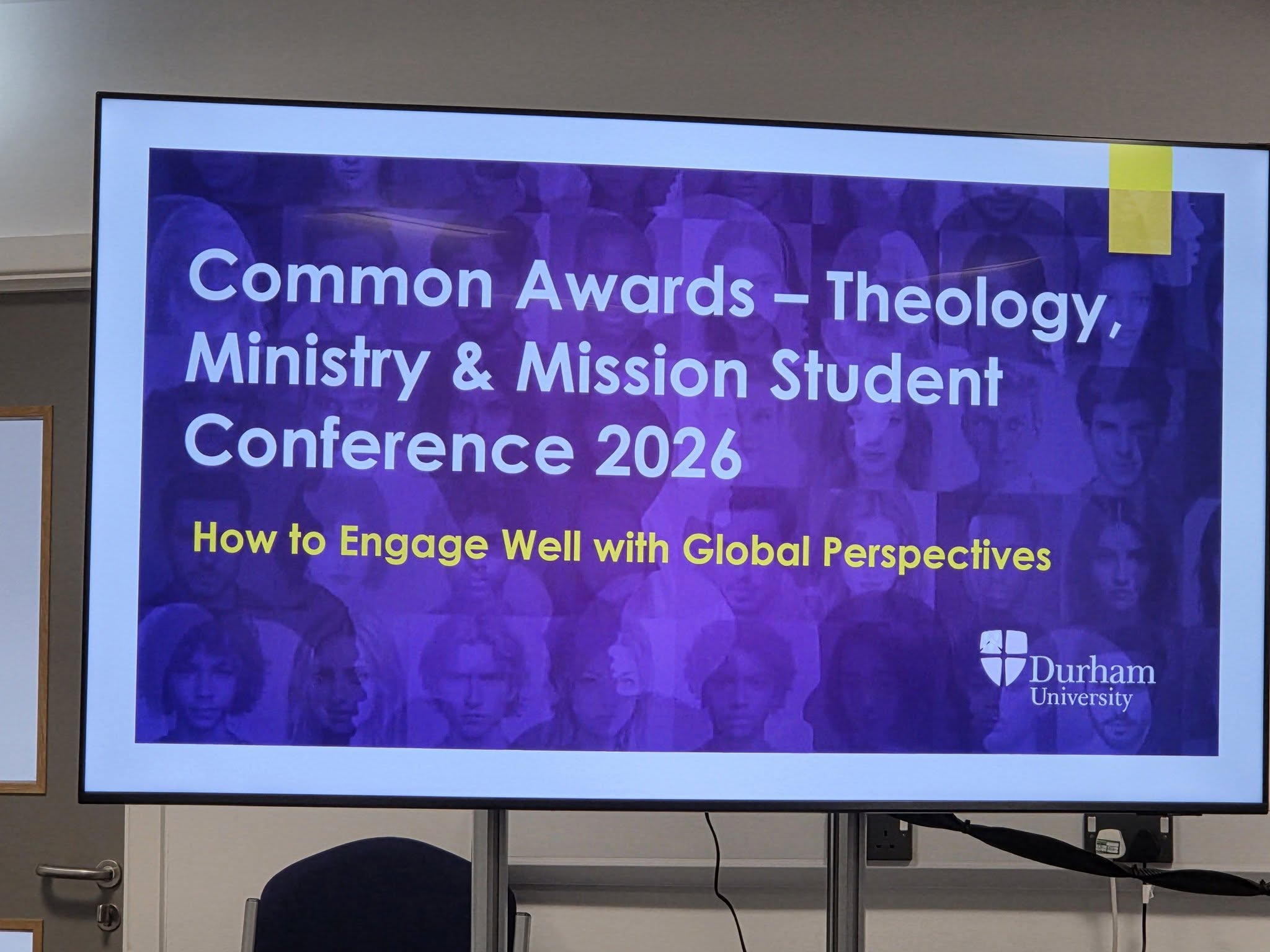
The Scottish Episcopal Institute sent two of our students, Ayobami Oluwagbile, a BA Contextual Student, and Rev Ross Stirling-Young, a BA Student serving his curacy, to the Common Awards Student Conference held at The Queen’s Foundation, Birmingham. The theme of the conference was ‘How to Engage Well with Global Perspectives.’
Ayobami and Ross share reflections on the event below.
‘Travelling to Birmingham this year was not in my plans, but I was delighted to receive an email from the Director of Studies of the Scottish Episcopal Institute (SEI) nominating me as one of two student representatives to the 2026 Common Awards Students’ Conference. The conference took place at The Queens Foundation, Birmingham, from Friday 20th to Saturday 21st March, gathering students from nineteen Theological Education Institutions (TEIs) across Britain around the theme, “How to engage well with Global Perspectives.”
The heart of the conference for me was the reminder that we belong to a bigger world, and that reading widely and listening carefully to diverse voices enriches our understanding—particularly when we reflect on God, the Bible and the Church. A surprising illustration was Havea’s “coconut theology” from Melanesia. Because island communities had never encountered lamb, nor commonly eaten bread or drunk wine, traditional Christian images could feel abstract. Local theologians therefore spoke of Christ as “the pig of God,” and of the Eucharist as “the coconut of Christ.” The coconut’s flesh and water, held together like an offering in a chalice, became a symbol of the body and blood of Christ: one gift that is broken, shared and received. We also explored how positionality (the lens through which we see) and privilege (unearned advantages) are not inherently wrong, yet can create blind spots, generalisations and even a sense of superiority that makes genuine engagement difficult.
The sessions challenged the limits of theological education shaped largely by Western traditions and urged us to resist passive acceptance of information, seeking wisdom from a multitude of global voices and trusting that divine wisdom is dispersed throughout creation. My main takeaway is that encountering the unfamiliar presents a choice: to resist or to embrace. Embracing difference with humility—listening to understand rather than to defend—broadens faith and honours the imago Dei reflected in every person.’ – Ayobami Oluwagbile
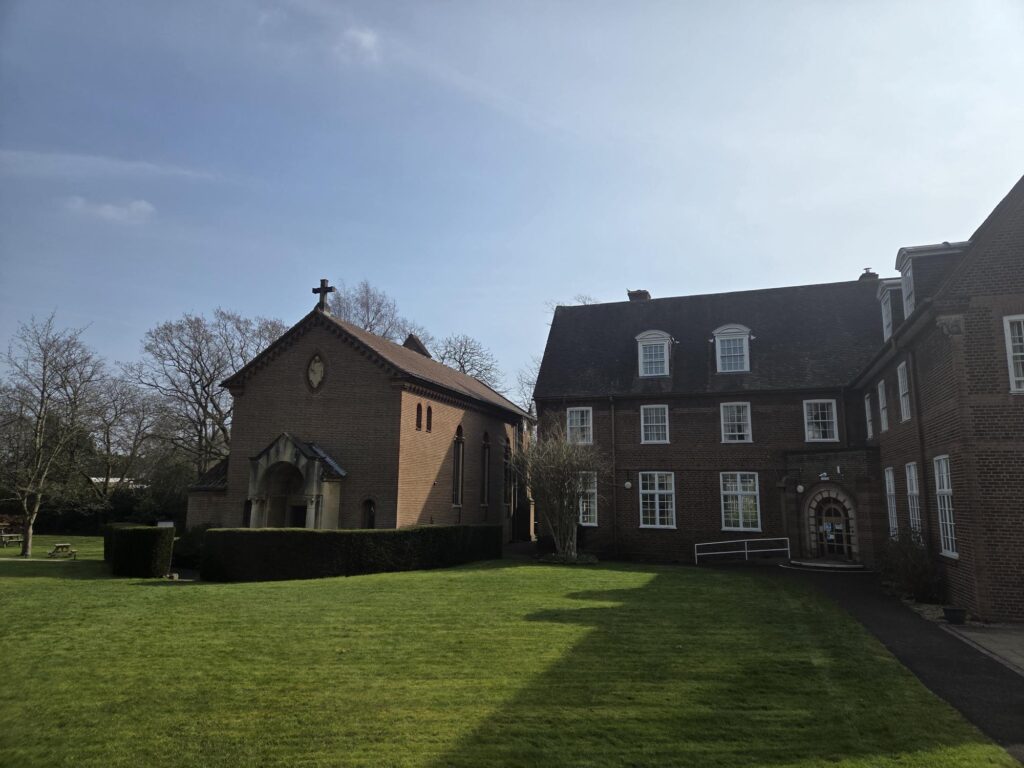
Alt Text Image 1: The Queen’s Foundation facilities
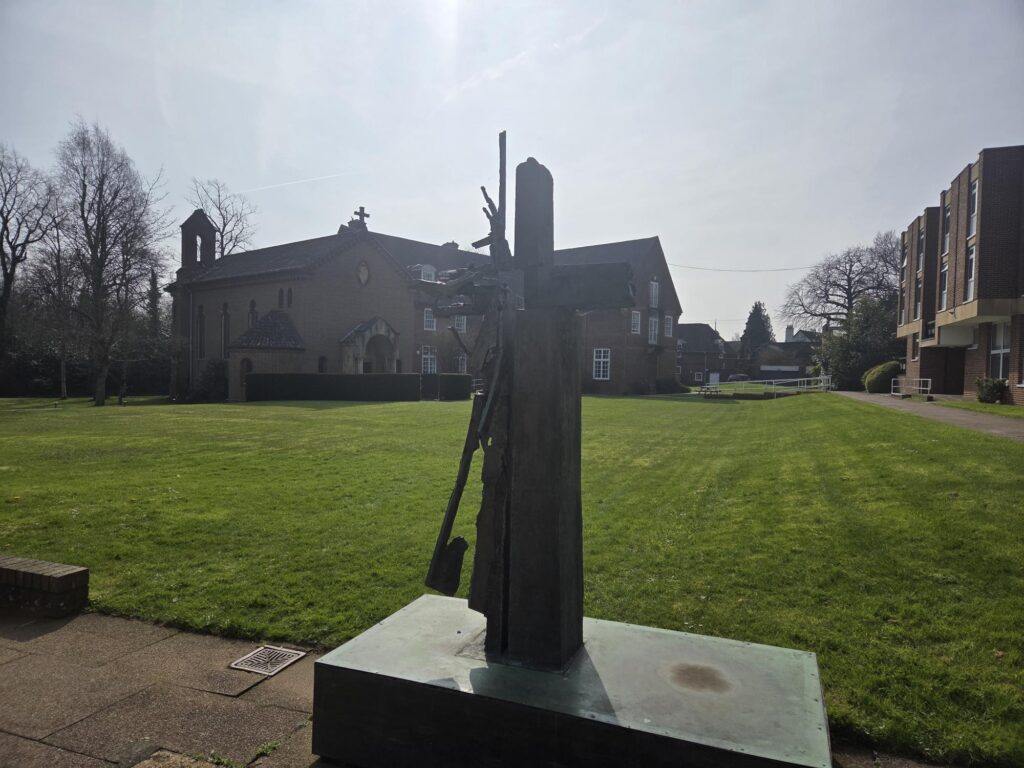
Alt Text Image 2: The Queen’s cross looking out to a patch of grass and The Queen’s Foundation facilities
Photo Credit: Ross Stirling-Young
‘Recently, I had the privilege of representing the Scottish Episcopal Institute at the “How to Engage Well with Global Perspectives” conference at The Queen’s Foundation in Birmingham. It was a deeply enriching few days of listening, learning, and reflecting alongside people from a wide range of theological institutions and church contexts.
What surprised me most was just how powerful simple conversation can be. Much of the conference took place around tables, listening carefully to one another’s stories, experiences, and perspectives. In a world that often encourages quick opinions and instant responses, there was something profoundly moving about taking time to truly listen. I found myself challenged at times, particularly in conversations around privilege, positionality, and the importance of making space for voices that are not always heard within the wider Church.
One of the things I learned most deeply was the importance of humility in ministry and theological engagement. The global Church is incredibly diverse, and yet there was also a strong sense of unity in our shared desire to follow Christ faithfully. Many of the discussions connected with my own experiences in the Diocese of Calcutta and reminded me again that the Church is far bigger than our own local contexts.
It felt both encouraging and humbling to represent the Scottish Episcopal Institute. I was proud to share something of our tradition and context, while also learning from others. The conference reminded me that theological education is not simply about gaining knowledge, but about being formed through encounter, dialogue, and relationship.
Above all, I came away grateful — grateful for the opportunity, for the conversations shared, and for the reminder that the Church is called to walk together, listening well to one another in love.’ – Rev Ross Stirling-Young